 Dextra Light
UV Ozone Lamps Factory & Exporter Serving Samara
Engineering-Grade Photochemical & Photolytic Solutions for Aerospace, Automotive Curing, Petrochemical Purification, and Municipal Water Disinfection in the Volga Basin
Send Inquiry NowFeatured High-Performance UV Solutions for Samara Enterprises
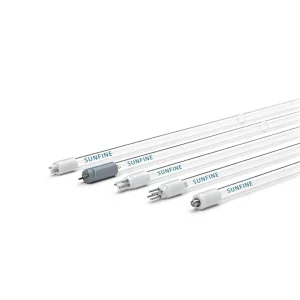
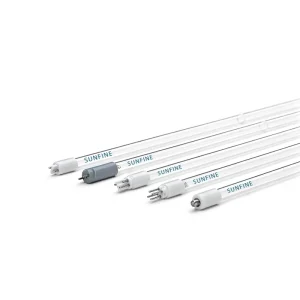
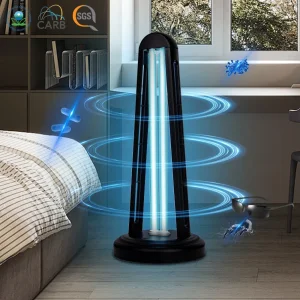
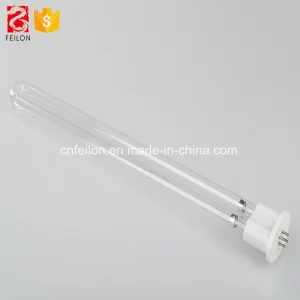
Direct OEM & Industrial Replacement Quartz UV Lamps engineered for continuous duty cycle and extreme climate stability.
Macro & Regional Industrial Analysis: Photochemical Demands in Samara
Understanding the unique operational parameters of Samara’s heavy manufacturing, chemical synthesis, aerospace cluster, and municipal water utilities along the Volga River basin.
As one of the Russian Federation's principal industrial, scientific, and transportation hubs, Samara Oblast hosts an extraordinarily diverse industrial matrix. From the aerospace engineering powerhouses such as the Progress Rocket Space Centre and engine manufacturer Kuznetsov, to the automotive and sub-component manufacturing corridors stretching toward Tolyatti, Samara's heavy industry operates under rigorous mechanical, environmental, and thermal stresses. Maintaining operational excellence requires advanced photochemical contamination control, high-efficiency ultraviolet curing, and chemical-free liquid and gas purification systems.
Key Industrial Dynamics Driving UV & Ozone Lamp Demand in Samara
The deployment of UV-C germicidal and VUV ozone lamps across Samara is governed by specific regional industrial imperatives:
- Aerospace & Precision Machinery Surface Activation: Micro-optical and aerospace components engineered in Samara demand ultra-clean surfaces free of residual hydrocarbon films. 185nm UV ozone photochemical cleaning provides non-contact organic residue removal down to angstrom-level precision.
- Automotive & Machine Coating Photopolymerization: Automotive supplier clusters in the Samara-Tolyatti industrial node utilize high-intensity ultraviolet mercury and amalgam quartz tubes for instantaneous curing of varnishes, lacquers, and anti-corrosive polymers, eliminating thermal stress on heat-sensitive substrates.
- Volga River Basin Water Quality & Industrial Effluent Management: Water intake and effluent treatment along the Volga River require compliance with stringent Eurasian regulatory frameworks (GOST and SanPiN standards). UV disinfection systems provide chemical-free destruction of Cryptosporidium, Giardia lamblia, and multi-drug resistant bacteria without generating harmful Chlorinated Organic Compounds (COCs) or Trihalomethanes (THMs).
- Petrochemical & Refinery Gas Deodorization: Heavy industrial refineries, including the Kuibyshev and Novokuibyshevsk processing complexes, generate complex gaseous emissions containing hydrogen sulfide ($H_2S$), mercaptans, and aromatic hydrocarbons. UV/Ozone catalytic photo-oxidation breaks down complex ring structures in exhaust airstreams.
Technical Physics: Photolytic Disinfection & Photochemical Ozone Synthesis
An engineering whitepaper on mercury vapor discharge mechanisms, quartz glass transmittance profiles, and Advanced Oxidation Processes (AOP).
Ultraviolet radiation occupies the electromagnetic spectrum between 100 nm and 400 nm. In industrial applications, two specific spectral resonance lines generated by low-pressure mercury arc discharges are utilized: 253.7 nanometers (UV-C Germicidal) and 184.9 nanometers (Vacuum UV Ozone Generating).
1. 253.7nm UV-C Germicidal Photolysis (Ozone-Free Technology)
Photons emitted at 253.7 nm align almost perfectly with the peak absorption spectrum of nucleic acids (DNA and RNA) in microorganisms, which occurs at roughly 260 nm. When thymine (in DNA) or uracil (in RNA) bases absorb 254nm photons, adjacent pyrimidine bases form covalent dimers (thymine dimers). This molecular cross-linking alters the double helix geometry, rendering the micro-organism incapable of transcription, replication, or cellular repair.
2. 184.9nm Vacuum UV (VUV) Photochemical Ozone Generation
Unlike 254nm photons, ultra-short 185nm photons possess energy levels high enough ($6.7 \text{ eV}$) to photolyze diatomic oxygen ($O_2$) molecules present in ambient air or compressed gas feeds:
1) $O_2 + h\nu (185\text{nm}) \rightarrow O(^3P) + O(^3P)$ (Photolytic dissociation of molecular oxygen)
2) $O(^3P) + O_2 + M \rightarrow O_3 + M$ (Triple-body collision producing Ozone)
3) $O_3 + h\nu (254\text{nm}) \rightarrow O_2 + O(^1D)$ (Secondary photolysis yielding high-reactivity singlet oxygen)
Ozone ($O_3$) is a potent, non-selective chemical oxidant with an oxidation potential of $2.07 \text{ V}$. Because ozone is a gas, it diffuses into inaccessible shadowed areas, air ducts, structural crevices, and complex machinery geometry where direct optical line-of-sight UV photons cannot reach.
3. Advanced Oxidation Processes (AOP) for Industrial Wastewater in Samara
When treating toxic industrial wastewater containing phenol compounds, petroleum hydrocarbons, pesticide runoff, or refractory organic carbon (TOC), standalone biological or mechanical filtration is often insufficient. Synergistic AOP systems combine 254/185nm UV lamps with ozone ($O_3$) or hydrogen peroxide ($H_2O_2$) to generate Hydroxyl Radicals ($\cdot OH$).
With an oxidation potential of $2.80 \text{ V}$ (second only to fluorine), hydroxyl radicals instantly abstract hydrogen atoms from complex carbon rings, breaking non-biodegradable pollutants down into harmless carbon dioxide ($CO_2$), water ($H_2O$), and mineral salts.
| Parameter / Feature | 253.7nm Ozone-Free UV Lamps | 184.9nm Ozone-Generating VUV Lamps |
|---|---|---|
| Primary Quartz Type | Doped Synthetic Quartz (Titanium-doped, block 185nm line) | High-Purity Fused Synthetic Silica (VUV transparent) |
| Primary Mechanism | Direct DNA/RNA Pyrimidine Dimerization | Photo-oxidation of $O_2$ into Ozone ($O_3$) + Direct UV |
| Shadow Line-of-Sight Effect | Requires direct line-of-sight photon contact | Gas-phase diffusion eliminates shadow limitations |
| Target Application | Flow-through water purifiers, occupied air disinfection | Cleanroom total sterilization, VOC scrubbing, surface prep |
| Ozone Residual Management | None required (Zero ozone off-gassing) | Requires 254nm destruction lamp or catalytic destroyer |
Manufacturing Plant Capabilities & Global OEM Infrastructure
Backed by over 15 years of industry-leading photolytic research, world-class surface placement technology, and scalable production facilities.
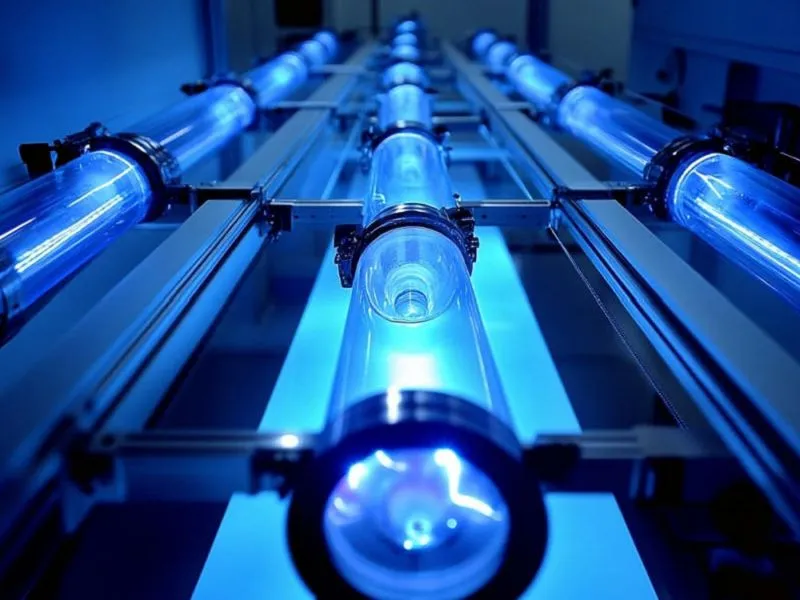
Zhongshan Dextra Lights Technology Co., Ltd.
Established in March 2012, Zhongshan Dextra Lights Technology Co., Ltd. stands as a premier high-tech enterprise specializing in the research, design, production, and worldwide export of industrial ultraviolet lamps, excimer technologies, and high-reliability optical display hardware. Our senior core R&D engineering team brings over 15 years of continuous expertise in photonics, plasma discharge chemistry, and UV tube manufacturing.
Operating from an initial capital investment of 10 million RMB, our modern manufacturing complex spans over 9,000 square meters and employs more than 120 dedicated specialists. Our facility houses a state-of-the-art photonics laboratory, rigorous technical engineering testing rigs, and an elite team of 10 domestic and international optical development engineers.
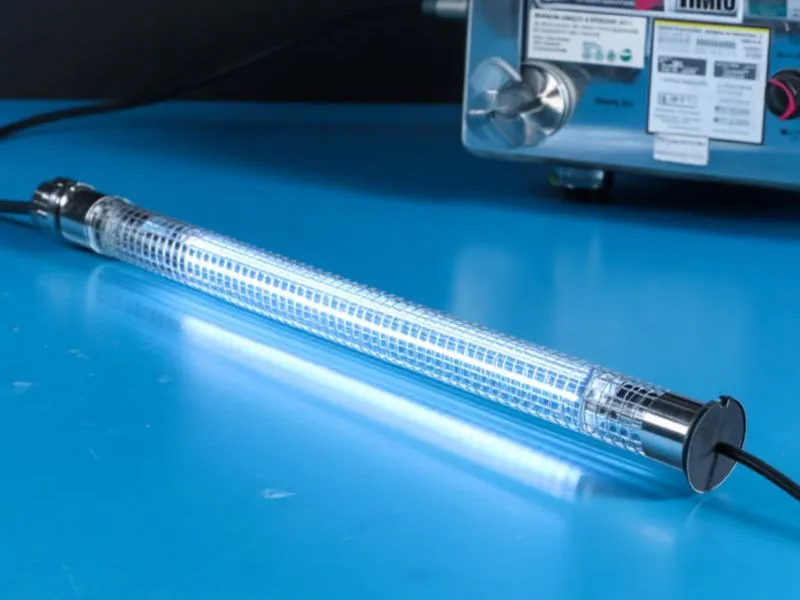
High-Precision Automated Manufacturing & Quality Control
To guarantee absolute consistency across millions of quartz tubes annually, our production floor is equipped with 4 fully automated manufacturing lines and 36 VPM high-speed placement machines. Every single batch of UV and Ozone lamps undergoes spectral energy profiling, pressure sealing tests, and 1,000-hour burn-in degradation analysis before shipment.
With an annual sales volume exceeding RMB 270 million (with specialized UV products accounting for 37.8% of total revenue and maintaining a annual sales growth rate above 9.2%), our global service network spans over 80 countries and regions across Europe, North America, the Middle East, Africa, and Southeast Asia. Driven by continuous innovation, our factory holds 50 Chinese patents in photolytic design and lamp construction.
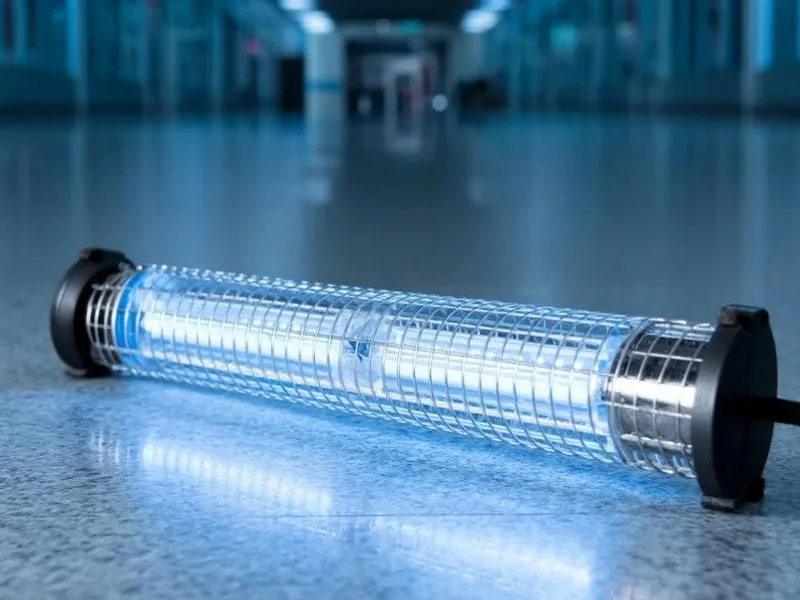
Localized Application Scenarios across Samara Sectoral Economy
Engineered solutions tailored to the operational conditions of Samara’s primary economic drivers.
1. Aerospace Micro-Surface Cleaning
In Samara’s precision aerospace manufacturing facilities, micro-contaminants or hydrocarbon film layers on titanium alloys, aluminum structures, and optical glass compromise adhesive bonding and protective coatings. Our 185nm VUV ozone lamps strip organic monolayers without abrasive grit blasting or toxic solvent washing.
2. Automotive Paint Line VOC Destruction
Industrial painting operations in the Samara-Tolyatti industrial axis produce exhaust streams rich in volatile hydrocarbons. Inline photolytic destruction reactors powered by high-output amalgam UV lamps decompose solvent vapors, ensuring full compliance with regional ambient air standards.
3. Cold-Climate Water Treatment
Municipal drinking water facilities and food/beverage processing plants taking raw water from the Volga River require guaranteed disinfection even at water temperatures approaching 0°C. Amalgam quartz lamps maintain stable mercury vapor pressure across extreme seasonal temperature fluctuations.
Complete UV & Ozone Product Catalog for Samara Industrial Buyers
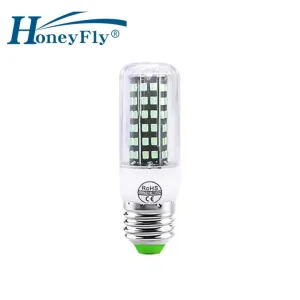
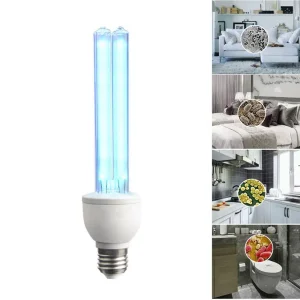
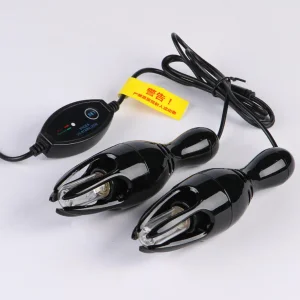
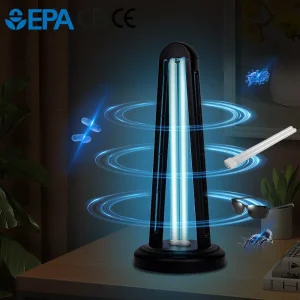
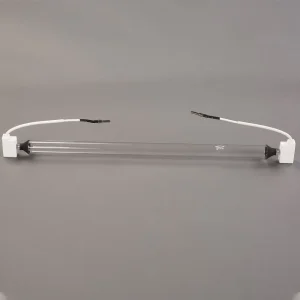
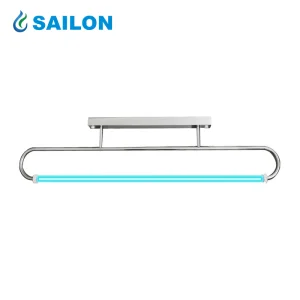
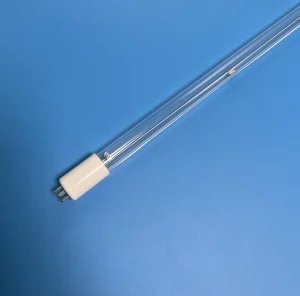
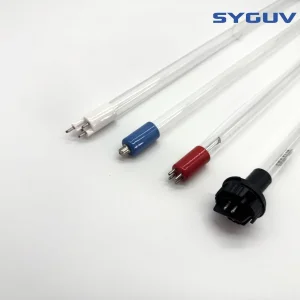
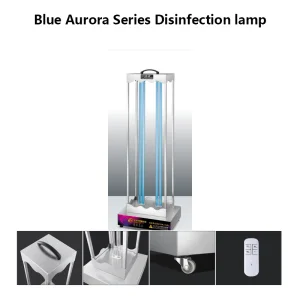
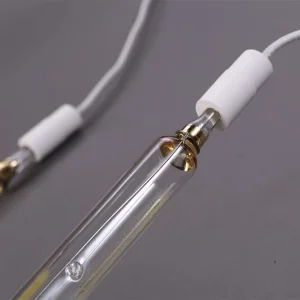
Full spectrum of low-pressure quartz, high-output amalgam, T5/T8 glass tube lamps, and portable sterilization units.

Compliance, Logistics & Localized Engineering Support
Ensuring seamless regulatory adherence, extreme thermal protection during transport, and direct technical integration for Samara enterprises.
1. Regulatory Compliance (EAC, GOST & CE Standards)
Exporting industrial photolytic hardware to the Samara region requires strict adherence to Eurasian Customs Union technical regulations. Our UV lamp units and electronic driver ballasts comply with:
- TR CU 004/2011: Safety of Low-Voltage Equipment.
- TR CU 020/2011: Electromagnetic Compatibility of Technical Means.
- SanPiN 2.2.4.3359-16: Physical factors in the working environment (safeguarding operators from direct optical UV exposure and ozone off-gassing threshold limits).
2. Cold-Chain Fragility Logistics & Shock-Proof Packaging
Transporting high-purity synthetic quartz glass tubes across long-distance transit corridors into Samara requires specialized packaging protocols. Our quartz tubes are encased in high-density polyethylene foam sleeves, vacuum-sealed against ambient humidity, and packed inside drop-tested reinforced wooden crates equipped with tilt and impact indicator sensors.
3. Electrical Grid Stability & Smart Electronic Ballasts
Industrial power grids in Samara may experience voltage fluctuations during peak winter heating cycles. Our proprietary electronic ballasts feature wide input voltage range tolerance (100V–260V AC), active Power Factor Correction (PFC > 0.98), preheat soft-start circuits, and built-in failure detection ports (RS485 Modbus protocol compatible) for real-time monitoring via SCADA systems.
Technical Roadmap: Next-Generation Photonic Innovations (2025–2030)
Advancing from low-pressure mercury arc discharges to Far-UVC 222nm excimers and solid-state high-power UVC LEDs.
1. Far-UVC 222nm Krypton-Chloride (KrCl) Excimer
Emerging 222nm Far-UVC technologies provide human-safe air and surface disinfection. Because 222nm photons are strongly absorbed by the outer stratum corneum of human skin and tear film of the eye, they kill pathogens without penetrating living human tissue.
2. High-Density Solid-State UVC LED Arrays
Advancements in Aluminum Gallium Nitride (AlGaN) semiconductor manufacturing are pushing UVC LED wall-plug efficiency past 12%. Solid-state systems offer instant on/off toggling, zero mercury hazard, and custom optical beam shaping for compact reactor designs.
3. IoT Sensor-Driven Adaptive Irradiance
Integrating narrow-band UV sensors directly into water and air treatment chambers allows automated lamp dimming based on fluid transmittance variations, drastically lowering energy consumption in industrial facilities.
Frequently Asked Questions (FAQ) for Engineering & Procurement Teams
Direct answers to technical, logistical, and operational queries from Samara industrial plant managers.
Ready to Optimize Your Industrial UV Operations in Samara?
Consult with our senior photonics engineering team today for custom sizing, spectrum selection, OEM bulb cross-referencing, and direct factory pricing.
Send Inquiry Now