 Dextra Light
High-Efficiency UVC Lamps for Monterrey Infrastructure
Immediate procurement options engineered to suit standard HVAC ducts, cleanrooms, and medical facilities in Northeast Mexico.
The Monterrey Industrial Landscape: Why Active UVGI is Critical
Monterrey, Nuevo León, serves as the central industrial gateway of Northern Mexico. Propelled by the rapid rise of nearshoring, global automotive assembly operations, semiconductor packaging nodes, and international pharmaceutical hubs have set up advanced manufacturing bases in the region. Operating these sophisticated cleanrooms and high-occupancy commercial plants requires strict indoor air quality (IAQ) compliance.
The semi-arid climate in the Northeast, combined with local industrial dust emissions, puts immense strain on HVAC systems. Traditional mechanical filters (like MERV 13 or HEPA) are highly effective at capturing particulates, but they act as physical barriers where captured pathogens can multiply over time. Integrating active Ultraviolet Germicidal Irradiation (UVGI) systems has transitioned from a niche design option to a baseline building spec.
By supplying high-output 253.7nm UVC systems, global exporters provide Monterrey engineering companies with the tools needed to sanitize air streams in real time. This keeps heat-exchange coils free from bio-contamination and eliminates airborne pathogens like virus strains, mold spores, and bacterial contaminants that bypass traditional filters.
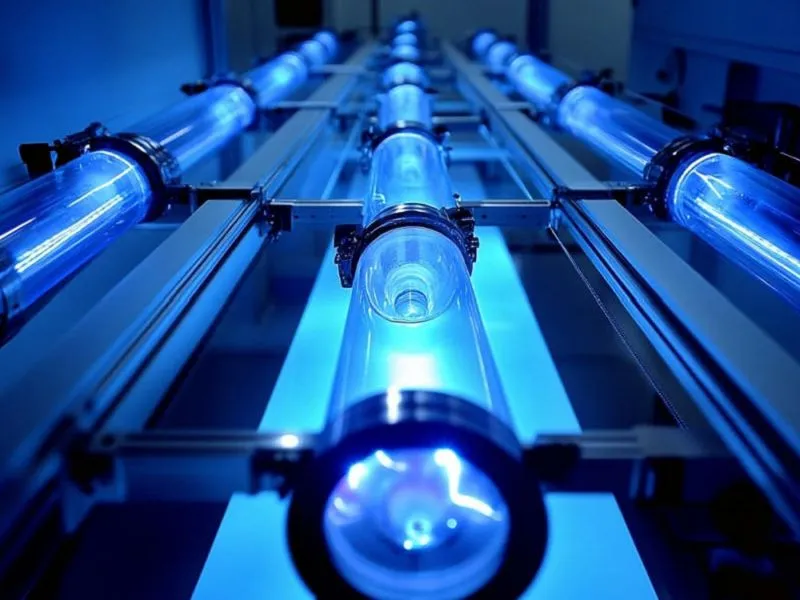
Technological Trajectories in UVC Air Disinfection
Decoding wavelengths, tube materials, and ballast interfaces for industrial applications.
253.7nm vs. 222nm Far-UVC
While low-pressure mercury vapor lamps at 253.7nm remain the global benchmark for high-output, duct-installed air sterilization, 222nm Krypton-Chloride excimer technology is expanding in occupied zones due to its biosafe optical properties, which do not penetrate human eyes or skin cells.
Amalgam vs. Standard Quartz
Amalgam lamp configurations deliver up to three times the UVC output of standard low-pressure lamps at equivalent lengths. This output remains stable even under fluctuating duct airflows and temperatures ranging from 4°C to 40°C, making them ideal for massive industrial AHUs.
Ozone Generation Control
Synthetic quartz envelopes block the 185nm VUV spectrum to ensure completely ozone-free operation in sensitive public spaces. In contrast, natural quartz allows 185nm transmission to generate ozone for specialized exhaust deodorization and deep oxidation processes.
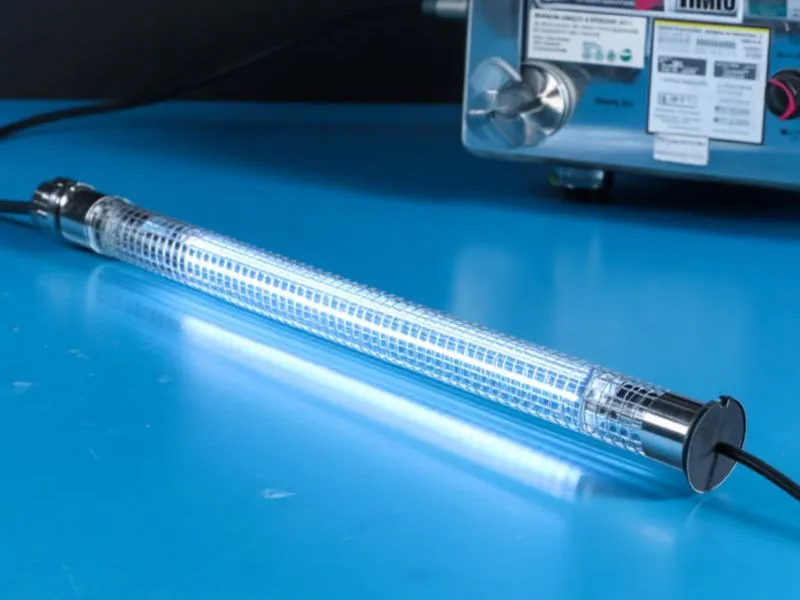
Macro-Level Engineering Integration for Large Commercial HVACs
Integrating germicidal UVGI into massive central HVAC networks requires robust calculations to ensure optimal pathogen inactivation. Air passing through commercial ducts often travels at speeds of 2.5 to 5.0 meters per second (500 to 1000 fpm). To achieve a 99.9% single-pass kill rate (a 3-log reduction) for target pathogens like influenza or bacterial endospores, the air must receive a precise dose of UVC energy.
UVC Dosage (µW·s/cm²) = UVC Intensity (µW/cm²) × Exposure Time (seconds).
In high-velocity airflows, the exposure window is often less than a fraction of a second. To meet this challenge, design engineers in Monterrey deploy multi-lamp, high-intensity modular arrays positioned perpendicular to the airflow direction inside the air handling units (AHUs).
Beyond air disinfection, installing UVC arrays facing the cooling coil surfaces prevents the growth of mold and complex biological films. This coil maintenance preserves the original heat transfer coefficients of the cooling systems, resulting in up to a 15% drop in operational energy consumption, while eliminating manual coil cleaning cycles.
China Factory 4.0: Scalable OEM/ODM Production & Quality Control
Founded in March 2012, Zhongshan Dextra Lights Technology Co., Ltd. operates at the leading edge of optical and germicidal technology. Armed with an initial capital investment of 10 million yuan, our facility spans a modern 9,000 square meter production floor designed for scale. Over 120 skilled staff and 10 world-class engineering specialists oversee our production processes.
Our manufacturing facility features 4 automated production lines and 36 high-speed VPM placement machines. These assets ensure high precision and steady throughput, enabling us to consistently ship large product batches with short lead times.
Last year, our total sales reached RMB 270 million, with UV products representing 37.8% of our output and growing at an annual rate of 9.2%. Guided by our core commitment to R&D, we hold 50 Chinese patents. Our engineering teams, boasting over 15 years of industry experience, customize mechanical, electronic, and optical specifications to meet the precise demands of global markets, including Monterrey and greater Northeast Mexico.
Dextra Lights Tech by the Numbers
Global reach backed by structured technical engineering and certified standards.
Localization, Standards Compliance, & Customs Assurance
Streamlining cross-border supply chains for smooth entry into Mexican industrial parks.
NOM Compliance
Our electrical ballast configurations and UV system components are built to satisfy Mexico's NOM (Normas Oficiales Mexicanas) standards, ensuring trouble-free site inspections and secure operations in local plants.
Laredo Gateway Transit
We work with leading freight forwarders to manage shipping through the Port of Altamira and across the Laredo land port. This ensures secure, timely delivery of fragile quartz glass components straight to Monterrey warehouses.
Detailed Batch Inspection Reports
Every shipment is accompanied by detailed spectroradiometric test data and electric ballast matching records. This guarantees stable UVC output and reliable operation from the first power-up.
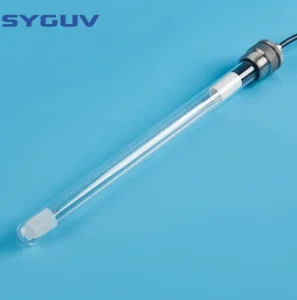
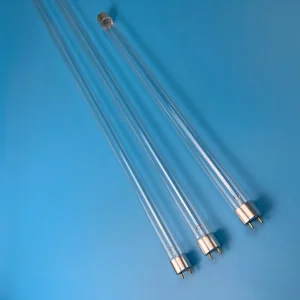
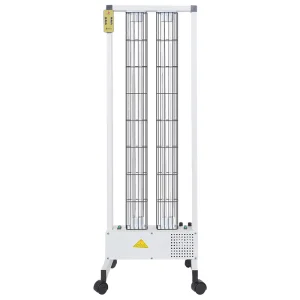
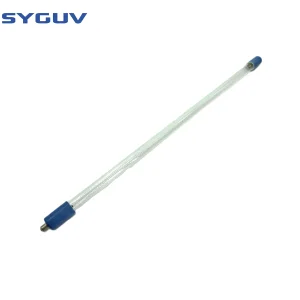
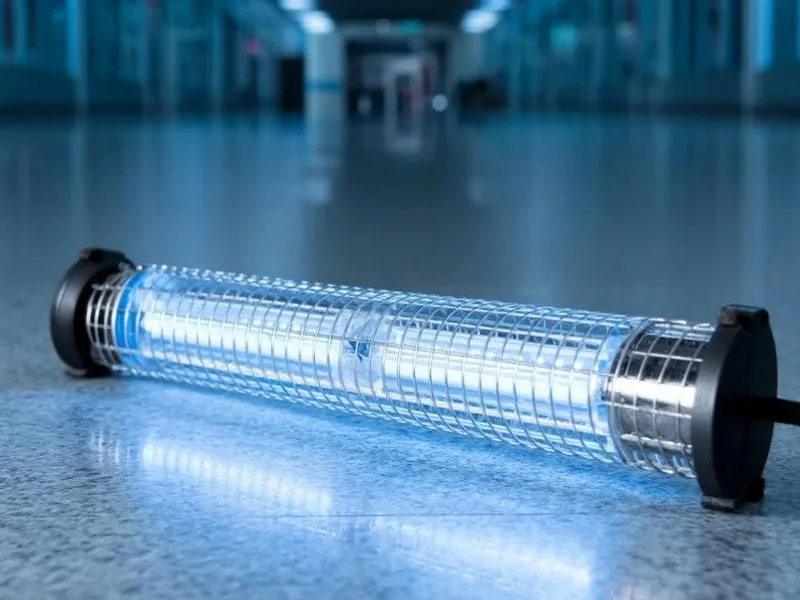
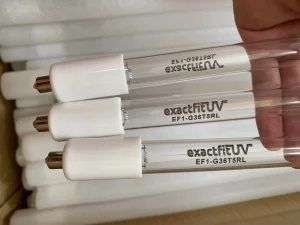
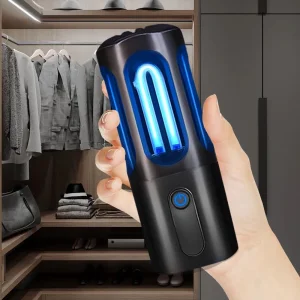
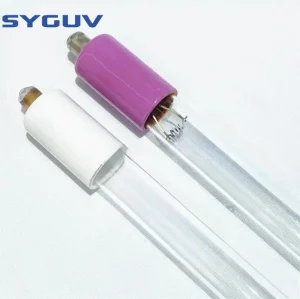
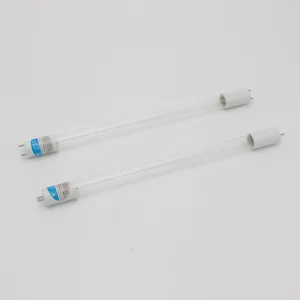
Industrial Germicidal & UV Air Treatment Inventory
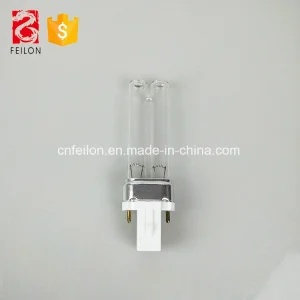
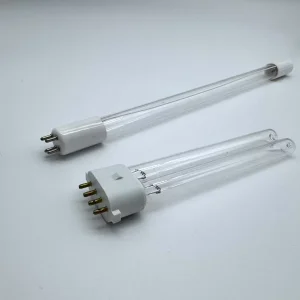
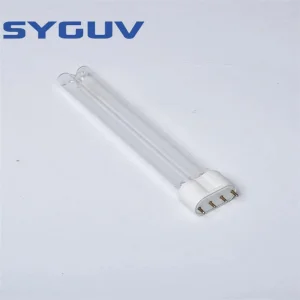
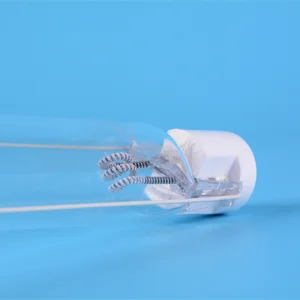
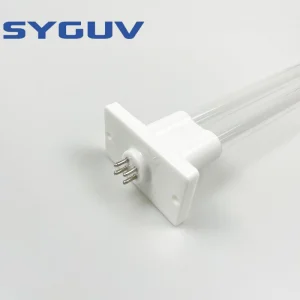
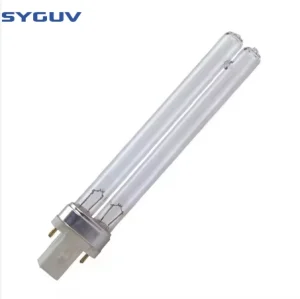
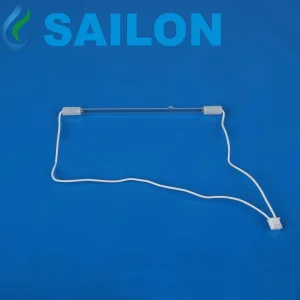
Select from our verified production inventory designed for global export to Monterrey's industrial distributors.
Technical FAQ & Engineering Inquiries
Answering complex questions from mechanical engineers, HVAC contractors, and procurement managers in Nuevo León.
How is UVC dosage calculated for fast-moving airflows in commercial HVAC systems?
UVC dosage is calculated using the formula: Dose (µW·s/cm²) = Intensity (µW/cm²) × Exposure Time (seconds). Because duct velocity in large commercial systems often reaches 2.5 to 5 m/s, the exposure time is brief. To ensure effective disinfection, we design multi-lamp configurations that span the entire cross-section of the duct. This optimizes lamp spacing to deliver intense, uniform UVC exposure across the moving air stream.
Are there ozone risks with using 253.7nm UVC lamps in indoor systems?
No, our 253.7nm germicidal lamps are manufactured using doped quartz glass, which filters out the 185nm wavelength responsible for generating ozone. This ensures safe, ozone-free air disinfection in populated spaces like offices, schools, and hospitals in Monterrey.
How does cold airflow affect the performance of UVC lamps?
Standard low-pressure mercury lamps can experience a drop in UVC output when exposed to cold airflows (such as 4°C to 15°C inside AHU coils). For these applications, we recommend our Amalgam Lamp technology. These lamps use an amalgam compound rather than pure mercury vapor, which stabilizes internal vapor pressure and maintains high UVC output across varying duct temperatures.
What custom manufacturing options are available for local projects in Monterrey?
Through our OEM/ODM services, we customize lamp lengths, wattages (ranging from 3.5W up to 320W), base fittings (including T8, T5, G5, G13, and single-pin formats), and waterproof configurations. We also supply matched electronic ballasts to ensure high electrical efficiency and long lamp life under local voltage standards.
What are the typical lead times and logistics routes for shipments to Monterrey?
We coordinate shipments from our factory in Zhongshan, China, utilizing maritime shipping to the Port of Altamira or Port of Manzanillo, followed by overland transport. For urgent requirements, we organize air freight routed through Monterrey International Airport (MTY). Typical lead times range from 25 to 35 days for sea transport, depending on batch volume and customs clearance scheduling at the border.