Ultraviolet (UV) light plays an essential role in laboratory environments across various scientific fields. Its ability to eliminate pathogens and facilitate chemical reactions makes it invaluable for many laboratory processes. According to a report by the National Institutes of Health, UV light can reduce microbial contamination by over 99% when properly applied. This efficiency positions UV technology as a critical tool in maintaining sterile conditions.
How UV Light Is Used In Laboratory Environments encompasses several applications, from sterilizing equipment to enhancing analytical techniques. Researchers frequently utilize UV light for DNA analysis and purification. However, reliance on UV technology is not without challenges. Overexposure can damage sensitive materials, and improper use may lead to incomplete sterilization. Therefore, understanding the proper methodologies for utilizing UV light is crucial for maximizing its benefits and minimizing risks.
As labs continue to evolve, integrating UV technology thoughtfully is vital. The advancement in UV-C LEDs has sparked interest, promising increased efficiency and reduced energy consumption. Balancing these innovations with a deep understanding of UV light's limitations will be key to optimizing laboratory practices.
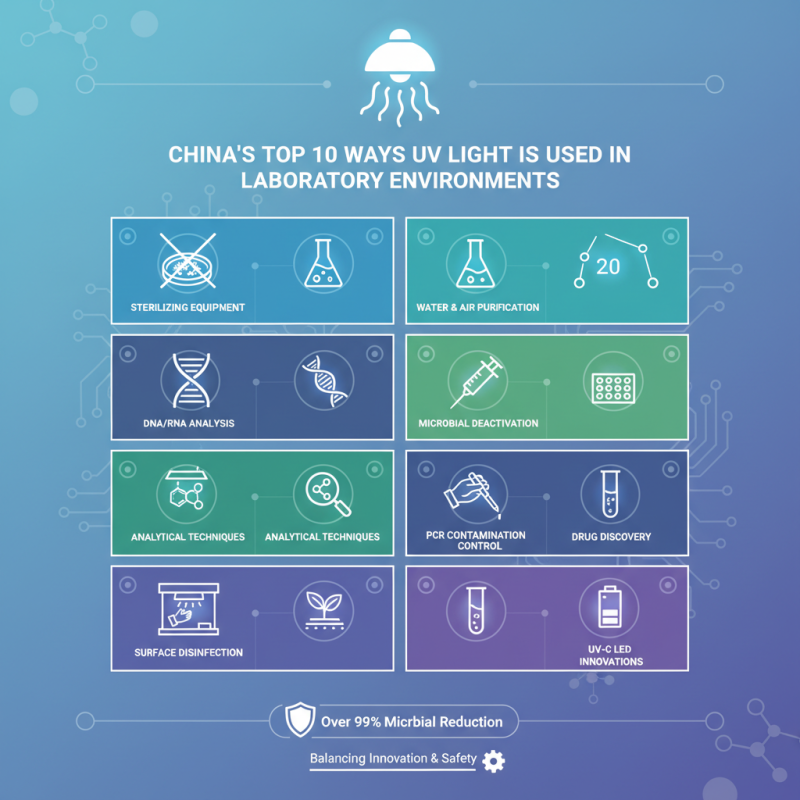
UV light plays a critical role in laboratory environments, particularly for sterilization and disinfection. This technology effectively eliminates pathogens, ensuring a safe workspace. Many labs use UV-C light, known for its germicidal properties. Studies show it can reduce contamination levels by over 99%. However, proper safety precautions are essential to prevent exposure.
Using UV light requires specific protocols. It's vital to regularly monitor UV intensity. Over time, bulbs may lose effectiveness. Labs should maintain a log to track replacements. Ensure surfaces are cleaned before UV exposure for the best results. Dust and debris can inhibit the disinfecting process.
When employing UV light, consider the potential drawbacks. Overexposure can damage materials and affect sensitive instruments. Training staff on UV safety is crucial. Personal protective equipment, such as goggles, should always be worn. Regular training sessions can reinforce safe practices. By being cautious and methodical, labs can harness the full potential of UV technology for a cleaner environment.
Ultraviolet (UV) light plays a crucial role in laboratory environments, particularly for identifying and analyzing biological samples. Researchers utilize UV light to observe the fluorescence of various biomolecules. For example, DNA and proteins exhibit unique fluorescent properties when exposed to UV radiation. This allows scientists to discern the presence and quantity of these biomolecules in complex samples.
In microscopy, UV light enhances the visibility of cellular components. It can reveal structures that might be invisible under standard lighting conditions. However, the use of UV light does come with its challenges. Frequent exposure can damage biological samples, leading to inaccurate data. Furthermore, over-reliance on UV techniques may result in a lack of exploration of other valuable analytical methods.
Lab protocols often incorporate UV light for sterilization, ensuring that equipment is free from contaminants. While this is effective, it is essential to ensure that all surfaces are adequately cleaned beforehand. In some cases, relying solely on UV sterilization may provide a false sense of security. Overall, understanding the applications and limitations of UV light is vital for accurate research in biological sciences.
Ultraviolet (UV) light plays a crucial role in enhancing chemical reactions within laboratory environments. When applied correctly, UV light can significantly accelerate reaction rates. According to a report by the American Chemical Society, reactions illuminated by UV light can proceed up to three times faster than those in standard conditions. This increase is vital for researchers looking to optimize experimental outcomes.
In many laboratory settings, UV light is used for processes such as photochemistry and polymerization. Creating new polymers through UV light can help develop stronger, lighter materials for various applications. Some studies show that UV-induced polymerization has seen a steady growth rate of 5% annually, underscoring its rising importance in scientific research. However, relying excessively on UV light brings risks. Overexposure can lead to unwanted side reactions, complicating results. Scientists must carefully balance UV intensity and exposure time. This aspect requires deeper reflection on optimal experimental design—suggesting the need for more comprehensive studies.
Moreover, when using UV light, safety protocols are essential. Prolonged exposure to UV radiation can pose health risks to researchers. Laboratories must ensure proper shielding and protective gear. Despite its benefits, UV light's unpredictable nature is a challenge. While it can enhance reactions, it may also lead to unpredictable contaminants in sensitive experiments. Understanding these nuances is critical for achieving reliable results in laboratory applications.
UV light is widely used in laboratory environments for purposes such as sterilization and photolithography. However, safety protocols are crucial to ensure the well-being of laboratory personnel. According to a report by the Centers for Disease Control and Prevention (CDC), exposure to UV radiation can cause skin burns and eye injuries. Laboratories must implement robust safety measures. This includes proper eye protection, such as goggles designed specifically for UV light. The use of appropriate gloves is also essential to minimize skin exposure.
Ventilation is another critical factor. Many laboratories employ UV light to disinfect surfaces and equipment. However, without adequate ventilation, harmful ozone can accumulate. OSHA guidelines recommend regular monitoring of UV levels in the lab. This can help ensure compliance with safety standards.
Furthermore, training is key. Staff must be educated on the hazards of UV light and how to handle it safely. Regular refresher courses can promote awareness. Despite these efforts, incidents still occur. A survey reported that nearly 20% of lab workers experienced UV-related injuries. This highlights the need for continuous improvement in safety protocols and training. Frequent assessments of safety measures can help identify areas for enhancement.
| Application | Purpose | Safety Protocols |
|---|---|---|
| Sterilization | To eliminate microorganisms in laboratory tools and surfaces | Wear UV protective eyewear; avoid direct exposure to skin |
| DNA Analysis | For visualization of nucleic acids in gels and slides | Use UV-blocking gloves; utilize shielded workstations |
| Cell Culturing | To maintain sterile conditions during cell growth | Only operate UV lamps when necessary; minimize exposure time |
| Material Characterization | To study the properties of materials under UV light | Keep a safe distance; use barriers where possible |
| Fluorescence Microscopy | To observe fluorescent labeled specimens | Wear protective eyewear; limit exposure to fluorescents |
| Water Purification | To disinfect water sources in labs | Ensure proper ventilation; use automated systems |
| Surface Analysis | To evaluate surface modifications and coatings | Use UV masks and gloves; operate in a controlled area |
| Research on Photostability | To assess the stability of compounds under UV radiation | Conduct assessments in a fume hood; monitor exposure |
| Photochemical Reactions | To initiate chemical changes through light exposure | Use appropriate eyewear; never look directly at the lamp |
| Environmental Monitoring | To measure pollutants and microbial content in air and water | Follow laboratory guidelines; maintain safety protocols at all times |
Ultraviolet (UV) light technology is transforming laboratory environments, enhancing efficiency and safety. Recent reports indicate that UV light systems can reduce microbial contamination by up to 99.9% in cleanroom settings. This remarkable capability demonstrates how critical UV light is for maintaining sterile conditions in laboratories. Moreover, with advancements in UV-C technology, laboratories see better virus inactivation rates than ever before.
Consider implementing UV light in surface disinfection protocols. Frequent exposure can minimize pathogen load significantly. However, proper safety measures are essential. Always ensure personnel is protected from direct UV exposure. Regular maintenance of UV equipment is necessary to maintain its efficacy.
While UV light offers many benefits, it’s not without limitations. Some materials can degrade under UV exposure, impacting their longevity. It’s crucial to assess what items are safe for UV treatment. Additionally, the presence of shadowed areas can lead to uneven disinfection results, creating potential blind spots. This requires careful planning when setting up a UV disinfection strategy.
: UV light is primarily used for sterilization and disinfection to eliminate pathogens and ensure safe workspaces.
UV light can accelerate chemical reactions, sometimes making them three times faster than standard conditions when applied correctly.
It's crucial to wear protective gear, such as goggles and gloves, to minimize skin and eye exposure.
UV bulbs can lose effectiveness over time; regular monitoring helps ensure they continue to produce adequate germicidal effects.
Prolonged exposure can cause skin burns, eye injuries, and may lead to unwanted chemical reactions in experiments.
Dust and debris on surfaces can reduce UV effectiveness, making it essential to clean before UV exposure.
Regular training reinforces safe practices, helping staff understand hazards and reducing the likelihood of accidents or injuries.
Adequate ventilation prevents harmful ozone accumulation, which can result from UV light usage in disinfection processes.
Frequent assessments of safety protocols can help identify weaknesses and guide improvements to further enhance safety.
Yes, while UV can enhance reactions, it may also introduce unpredictable contaminants, complicating experimental results.
UV light has become an essential tool in laboratory environments, showcasing its versatility through various applications. One of the primary uses is in sterilization and disinfection, effectively eliminating harmful microorganisms from surfaces and equipment. Additionally, UV light plays a crucial role in identifying and analyzing biological samples, enabling researchers to visualize components that are otherwise challenging to detect.
Moreover, How UV Light Is Used In Laboratory Environments extends to enhancing chemical reactions, where it can accelerate processes and improve yields. Adhering to safety protocols is paramount when working with UV light, ensuring that researchers remain protected from its harmful effects. Innovations in UV light technology continue to advance, leading to improved efficiency and effectiveness within laboratory settings. This multidimensional use underscores the significance of UV light in contemporary research practices.

Dextra Light