Choosing the China best UV light for scientific research requires more than comparing lamp power or price. Researchers need stable irradiance, accurate wavelengths, low thermal drift, and traceable calibration. A bright lamp can still produce unreliable results.
How UV Light Is Used In Scientific Research spans several demanding applications. Scientists use ultraviolet radiation for absorption spectroscopy, fluorescence excitation, photochemistry, semiconductor inspection, DNA studies, and controlled surface treatment. UV-C systems commonly operate between 200 and 280 nanometers, while many analytical instruments use deeper or near-ultraviolet bands. The International Commission on Illumination’s UV safety guidance stresses exposure control, shielding, and measured dose. These details matter beside a clean laboratory bench.
Ahmed Zewail, a pioneer of femtochemistry, said, “The way to understand the world is to watch it in motion.” His idea explains why researchers value pulsed UV sources and fast detectors. They reveal reactions that ordinary lighting cannot capture.
Industry evidence supports this expanding demand. Grand View Research estimates that the global ultraviolet disinfection equipment market will continue growing strongly through 2030. MarketsandMarkets also identifies spectroscopy, photolithography, and life-science testing as important UV technology applications. These reports show momentum, but they do not prove that every Chinese product is suitable for research.
The better choice depends on the experiment. Ask for spectral output data, calibration certificates, cooling details, lamp lifetime, and compatible optical filters. No single lamp wins every test. Even experienced teams can overlook stray reflections or aging output. That is where careful validation becomes more valuable than marketing claims.
Ultraviolet light occupies approximately 100–400 nanometres, beyond visible violet light. CIE classifications divide it into UVA, UVB, and UVC bands. Each band produces different photochemical and biological effects.
Wavelength matters greatly. A 365-nanometre source may support fluorescence studies, while shorter UV can trigger polymer degradation or nucleic-acid damage. The actual result depends on irradiance, exposure time, distance, and sample absorption. Dose equals irradiance multiplied by time. Simple, but often overlooked.
A practical laboratory assessment should measure spectral output and irradiance at the working surface. A lamp can look bright and still deliver weak ultraviolet energy. I would not trust color alone. The CIE 239:2021 report explains that UV-C effectiveness depends on delivered dose and target susceptibility, not nominal lamp power. Geometry also matters; a small distance change can alter exposure substantially.
Safety data deserves equal attention. The ICNIRP ultraviolet guidelines identify an effective daily exposure limit of 30 J/m² at 270 nanometres for skin and eye protection. This is not a research target. It is a control boundary. IEC 62471 also supports photobiological risk evaluation for lamps and lamp systems. The boundary is not always clean. Reflections from metal surfaces, uneven beams, and aging emitters can create measurement errors. A calibrated radiometer, documented setup, and repeated checks make experimental results more defensible.
Choosing a UV source starts with wavelength, not marketing claims. CIE 239:2020 divides ultraviolet radiation into UVA, UVB, and UVC bands. UVA spans 315–400 nanometers and supports fluorescence imaging, photochemistry, and material aging studies. A 365 nm source can reveal weak fluorescent traces on a dark laboratory bench. Small wavelength shifts can still change the result.
UVB UVB, from 280–315 nm, is widely used in photobiology and plant-response experiments. Researchers often control dose, exposure time, and beam uniformity together.
UVC UVC covers 100–280 nm, with strong nucleic-acid absorption near 260–265 nm. Around 254 nm, laboratories study microbial inactivation and surface decontamination.
The tempting answer is 254 nm. That answer is incomplete.
IEC 62471 requires evaluation of photobiological hazards, including ultraviolet exposure to skin and eyes. CIE guidance also stresses spectral measurement, not only the lamp’s stated peak. A calibrated spectroradiometer can reveal unwanted emission bands and aging-related drift. In practice, I would record irradiance at the sample, temperature, distance, and exposure duration. The setup matters greatly. Some published comparisons overlook reflections from metal surfaces, which can distort measurements. For reliable research, select the wavelength that matches the experiment, then verify its output with traceable calibration and documented safety controls.
China Best UV Light For Scientific Research?
How to Evaluate China-Made UV Research Lights
A China-made UV research light should be judged by evidence, not appearance or price. Start with the required wavelength range, spectral bandwidth, and irradiance stability. A unit marked “365 nm” may show unwanted output at nearby wavelengths. Request a measured spectrum from an independent laboratory. Check whether the calibration uses traceable equipment, preferably through an ISO/IEC 17025-accredited facility.
In practical lab testing, I examine output at startup and after thirty minutes. Heat can shift performance. A reliable housing should manage temperature without blocking ventilation or creating unstable readings. Confirm the working distance, beam uniformity, timer accuracy, and replacement-part availability. Ask for raw test data, not only a polished certificate. Some documents look official but reveal little about measurement conditions.
Safety details also matter. The light should include shielding, interlocks, warning labels, and suitable eye protection. Confirm electrical compliance for your region and review the manufacturer’s quality-control process. I would request a production sample before placing a large order. Even then, one sample cannot represent every batch. That is an uncomfortable limitation. Keep an acceptance record for wavelength, irradiance, temperature, and visible leakage. A clear warranty and responsive technical support can be as important as the lamp itself.
China Best UV Light For Scientific Research?
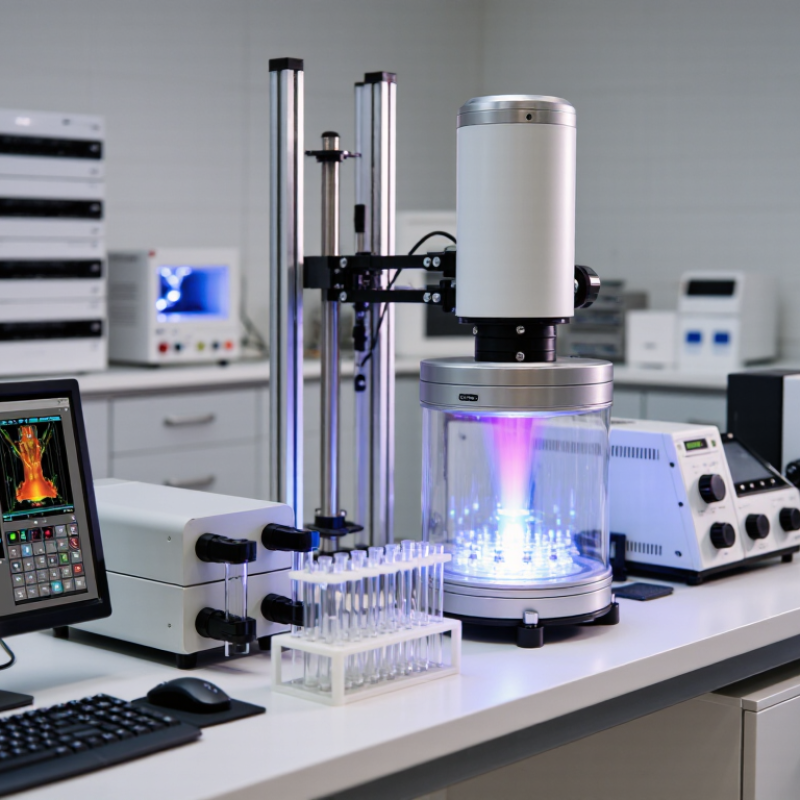
High-quality UV laboratory equipment begins with controlled, measurable output. Researchers should verify wavelength accuracy, irradiance stability, and exposure uniformity before testing samples. A reliable system offers adjustable intensity and precise timing, reducing inconsistent results between experiments. The chamber should also provide clear sample positioning, so every surface receives comparable UV exposure. Small details matter.
Safety features are equally important. A properly designed unit includes shielding, a door interlock, emergency shutoff, and clear operating indicators. Ventilation may be necessary when UV exposure produces irritating by-products. Operators should use documented procedures and suitable protective equipment. Calibration records add credibility to published findings and internal quality reviews. Data logging helps trace unusual results.
Practical experience often reveals overlooked issues. Dust on the lamp window can reduce output noticeably. Uneven sample placement can distort an otherwise careful experiment. No instrument remains accurate without maintenance. Even strong equipment needs periodic inspection, lamp replacement, and independent verification. Some laboratories focus heavily on power, yet forget spectral accuracy. That is a costly oversight. Before purchase, researchers should compare test reports, calibration methods, service support, and compatibility with their existing workflow. The best choice is not always the most powerful one. It is the unit that delivers repeatable performance under real laboratory conditions.
Representative ultraviolet wavelengths used in scientific research. Selecting high-quality laboratory equipment requires matching the wavelength to the application while also considering calibrated irradiance, spectral stability, cooling, shielding, and safety interlocks.
The chart shows common research wavelength centers: 222 nm for filtered far-UVC studies, 254 nm for germicidal and photochemistry work, 280–302 nm for UVB and nucleic-acid research, and 365 nm for UVA fluorescence and photochemical applications. These values indicate wavelength selection, not a performance ranking.
Safety standards should guide every UV light choice, not brightness alone. In Chinese laboratories, users should check applicable GB requirements and relevant IEC standards, including IEC 62471 for photobiological safety. Brightness is not safety. UVA, UVB, and UVC create different risks, so the wavelength must match the research purpose. A reliable unit should include shielding, warning labels, stable output, and functional interlocks. Electrical protection also matters, especially near liquids or heated instruments.
Proper use begins with a documented risk assessment. Restrict access during operation, and keep doors closed when exposure is possible. Never rely on ordinary glasses or laboratory coats for direct UV protection. Use certified eye and face protection suitable for the wavelength, plus covered skin protection. A calibrated radiometer can verify intensity and exposure time. Record these checks in a maintenance log. Replace damaged shields immediately. Small cracks can become serious hazards.
Training should include emergency steps, exposure limits, and equipment-specific procedures. Staff must understand that invisible UV may still cause injury. A common mistake is trusting an indicator lamp without testing the actual output. No checklist is perfect. Periodic review is necessary. Research teams should also confirm calibration traceability through a competent laboratory, such as one operating under ISO/IEC 17025 principles. The safest choice is not always the most powerful model; it is the one with controlled exposure, verified performance, and clear operating discipline.
UVA around 365 nanometers often reveals weak fluorescent traces on dark laboratory surfaces.
UVB spans 280–315 nanometers. Researchers usually control dose, exposure time, and beam uniformity together.
Around 254 nanometers, researchers study microbial inactivation and surface treatment. Actual output and exposure conditions still require verification.
Use a calibrated spectroradiometer or radiometer. Measure irradiance at the sample, not only near the lamp.
Useful features include shielding, warning labels, stable output, and working interlocks. Electrical protection matters near liquids.
Do not assume so. Use certified eye and face protection designed for the specific wavelength.
Record wavelength, irradiance, distance, temperature, exposure time, and calibration status. Small omissions can weaken comparisons.
Reflections from metal benches or instruments may increase local exposure. This detail is easy to overlook.
Review them periodically, especially after equipment changes or shield damage. No checklist stays perfect forever.
Not necessarily. Controlled exposure, verified output, shielding, and trained users matter more than brightness.
UV light is a form of electromagnetic radiation with wavelengths shorter than visible light, making it valuable for controlled scientific investigation. How UV Light Is Used In Scientific Research depends on its wavelength: UV-A is commonly applied in fluorescence observation and photochemical studies, UV-B supports material and biological response testing, and UV-C is used in controlled sterilization research and laboratory experiments. Each range produces different effects, so selecting the correct wavelength is essential for reliable results.
When evaluating China-made UV research lights, researchers should consider wavelength accuracy, optical stability, output uniformity, thermal management, operating lifetime, and compatibility with laboratory instruments. High-quality equipment should provide adjustable intensity, clear operating controls, dependable calibration, and protective shielding. Safe use requires appropriate eye and skin protection, enclosed or interlocked systems where possible, warning labels, ventilation when relevant, and strict adherence to laboratory safety procedures. Careful setup and regular maintenance help ensure accurate experiments while reducing unnecessary exposure risks.

Dextra Light