7 Best UV Technology Benefits for Industrial Cleaning?

Time:2026-09-24 Author:Mason
0%

Industrial facilities face a difficult cleaning equation: remove visible soil, reduce microbial risks, and protect production schedules. UV Technology Benefits For Industrial Cleaning deserve attention because ultraviolet-C energy can treat exposed surfaces without leaving chemical residues. The U.S. Environmental Protection Agency’s Ultraviolet Disinfection Guidance Manual explains that performance depends on delivered dose, exposure time, water or surface conditions, and equipment design. The technology is powerful, but never magic.

James R. Bolton, a leading ultraviolet-disinfection researcher, describes the principle clearly: “Ultraviolet disinfection is a physical process, not a chemical process.” That distinction matters beside stainless-steel conveyors, filling lines, tools, and hard-to-reach machine surfaces. Properly engineered UV-C systems can support rapid treatment, reduce chemical handling, and fit automated sanitation routines. They may also help lower water use when used as a supplement, rather than a replacement, for validated cleaning.

Evidence still needs discipline. The International Ultraviolet Association and EPA materials stress that shadows, dust, surface texture, lamp aging, and distance can reduce delivered dose. A clean-looking surface may still receive uneven exposure. That weakness is often ignored.

This article examines seven practical benefits, including chemical reduction, faster turnaround, lower residue, and improved process consistency. It also considers worker safety, validation, and maintenance requirements. A lamp alone cannot compensate for poor cleaning design. Measured dose, documented procedures, and routine verification make the difference between a promising installation and a dependable industrial tool.
7 Best UV Technology Benefits for Industrial Cleaning?

Understanding UV Technology in Industrial Cleaning

Industrial cleaning demands more than visible cleanliness. Dust in a return-air duct, residue on a conveyor, or biofilm in a drain can persist after routine washing. UV technology uses ultraviolet light to reduce microorganisms on exposed surfaces or in treated air and water. Its performance depends on wavelength, intensity, exposure time, and distance from the target. UV-C is commonly used for disinfection, but it does not remove dirt or replace physical cleaning.

In practice, a UV system may be installed inside an air-handling unit, above a moving belt, or in a water-treatment chamber. Operators need to consider shadows, surface geometry, and the speed of production lines. A shaded seam may receive little direct exposure. Soiling on a lamp can also reduce output. These details matter. A site assessment should verify that the equipment suits the target and operating conditions, while routine checks confirm lamp performance and safe operation.

UV treatment is not a universal fix. It works best as one part of a documented cleaning program, alongside washing, filtration, and inspection. Results should be checked with appropriate monitoring rather than assumed from the presence of a lamp. One imperfect point: real facilities change, and airflow or equipment layouts may shift after installation. Reassessment helps keep treatment aligned with actual conditions.

How UV Disinfection Works in Industrial Environments

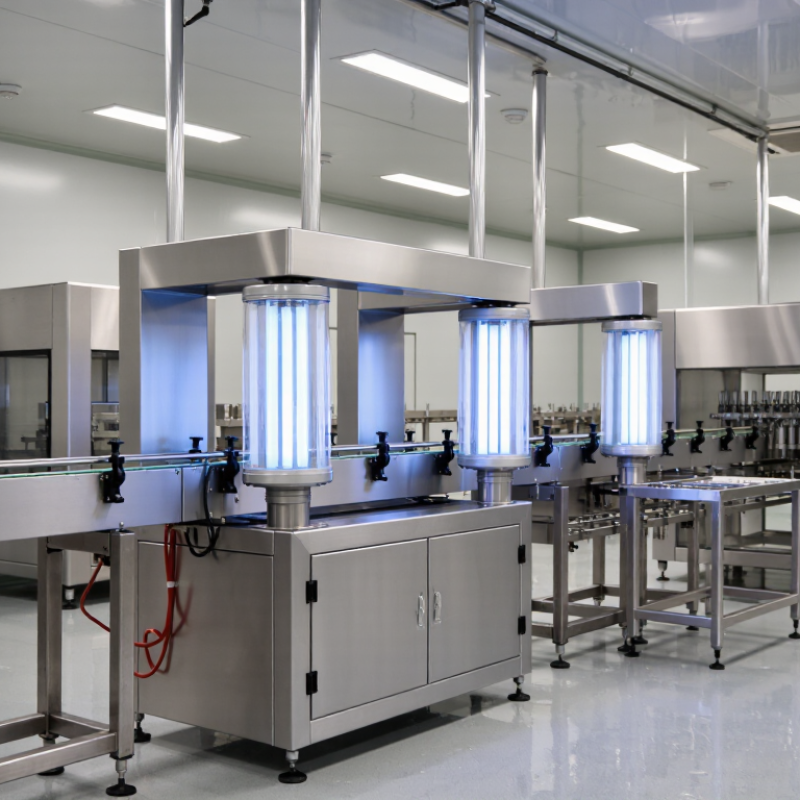
Ultraviolet disinfection uses short-wavelength UVC light to inactivate many microorganisms by damaging their genetic material. In industrial settings, lamps may be installed above conveyor belts, inside air ducts, or within enclosed water-treatment units. The exposure dose depends on light intensity and contact time. Distance, shadows, dust, and equipment layout can reduce that dose.

Placement matters. A UVC lamp cannot reliably disinfect a surface hidden beneath residue or blocked by a machine part. Staff typically need to clean surfaces first, then confirm that the system delivers an appropriate dose under real operating conditions. Sensors and routine lamp checks help reveal declining output. Still, monitoring is not perfect.

When properly designed and maintained, UV systems can support sanitation routines, treat moving air or water, and reduce reliance on some chemical disinfectants. They can also operate without leaving a chemical residue on treated surfaces. But they do not remove dirt, and they should not replace established cleaning procedures. Enclosed units and safety controls are important because direct UVC exposure can harm skin and eyes. Industrial teams should follow equipment instructions and assess the layout, exposure risks, and maintenance needs before installation. It is easy to overlook a shadowed corner.

Seven Key Benefits of UV-Based Cleaning Systems

Seven Key Benefits of UV-Based Cleaning Systems

UV-based systems can deliver seven practical benefits in industrial facilities. They reduce chemical consumption, limit water use, and leave no solvent residue. UV-C treatment also works quickly after surfaces are physically cleaned. It can target bacteria, viruses, and fungi when the applied dose is properly validated. The U.S. Environmental Protection Agency’s Ultraviolet Disinfection Guidance Manual cites 40 mJ/cm² as a reference validation dose for certain drinking-water virus claims. This figure is not a universal surface standard.

The technology supports repeatable processing. Sensors can monitor exposure time, lamp output, and conveyor speed. That helps operators document each cycle. UV systems also fit enclosed chambers, ductwork, packaging lines, and hard-to-reach equipment. They can reduce manual chemical handling and simplify some routine sanitation tasks. ASHRAE Handbook—HVAC Applications describes UV-C as a tool for controlling microbial growth on coils and in air systems. Lower fouling may help preserve heat-transfer performance.

The limits deserve attention. UV does not remove grease, dust, or biofilm. Physical cleaning remains essential. Shadows matter. Surface texture, lamp distance, and aging lamps can sharply reduce delivered dose. A 2023 industrial trial might look impressive, yet one poorly positioned component can weaken the result. Validation should use site-specific measurements, not assumptions. Safety interlocks, exposure shielding, and scheduled lamp inspections are necessary for reliable operation.

Selecting UV Equipment for Different Industrial Applications

Selecting UV equipment for industrial applications starts with the contamination, not the lamp. UV-C systems can reduce microorganisms, chemical use, residue, and treatment time. However, UV does not remove oil, dust, or scale. A dirty surface can block the light.

For water lines, engineers should check flow rate, turbidity, UV transmittance, and required dose. A narrow chamber may provide stronger exposure, but it can restrict production capacity. For conveyor surfaces, select equipment with adjustable height, shielding, and verified coverage. Uneven products create shadowed areas. Air-treatment units need correct airflow, pressure-drop control, and safe access for maintenance. Small details matter.

Test the worst operating condition. Use actual soil, maximum line speed, and aged lamps. Measure delivered dose with calibrated instruments, rather than trusting rated power. Include interlocks, warning labels, and a documented cleaning schedule. Replace lamps when output declines, not only when they fail. Materials also deserve attention; some plastics become brittle after repeated UV exposure.

In practice, selection is rarely perfect. A pilot test may reveal dead zones or unexpected heating. That is useful evidence, not wasted effort. Operators should record lamp hours, sensor readings, surface distance, and inspection results. Independent verification strengthens reliability, especially when the process affects product hygiene or worker safety. Adapting the equipment to the application usually delivers better results than choosing the highest-output unit.

Safety, Maintenance, and Performance Considerations

Industrial UV cleaning systems are useful when chemical residues, water use, or access constraints complicate routine sanitation. Yet UV-C is not a soil remover. The U.S. EPA’s Ultraviolet Disinfection Guidance Manual explains that delivered dose depends on intensity, exposure time, and UV transmittance. That matters around shadowed conveyors, narrow ducts, and textured surfaces. Operators should clean visible deposits first. Otherwise, performance can look stronger on paper than on the factory floor.

Safety controls require more than a warning label. ICNIRP’s 2010 guidance sets an effective UV-C exposure limit of 30 J/m² at 253.7 nanometres over eight hours. Interlocks, enclosure integrity, access sensors, and verified lockout procedures reduce accidental exposure. Independent measurements should confirm leakage after installation and maintenance. Do not trust indicators alone. Human factors remain the weak point.

Maintenance planning should track lamp age, irradiance, sleeve cleanliness, fan operation, and sensor calibration. Fouling can block output before a lamp visibly fails. EPA guidance also stresses dose verification, not simply equipment runtime. In practice, a calibrated radiometer and cleaning log provide better evidence than a timer. Performance improves when UV is paired with physical cleaning and airflow control. Still, every site behaves differently. Reflective stainless steel may help, while shadowed joints remain difficult. That limitation deserves honest reporting.

FAQS

What does UV technology do in industrial cleaning?

UV-C light reduces many microorganisms on exposed surfaces, in air, or in treated water. It does not remove dirt.

Can UV replace washing and physical cleaning?

No. Washing must remove grease, dust, and biofilm first. UV works as a supporting step.

Which factors affect UV disinfection performance?

Wavelength, intensity, exposure time, distance, and surface condition all matter. Shadows can sharply reduce the delivered dose.

Where can industrial UV systems be installed?

Common locations include air ducts, enclosed water chambers, and areas above moving conveyor belts. Placement must match the process.

Why are shadows a serious concern?

Hidden seams and machine parts may block direct light. A shaded corner can remain untreated.

Does UV leave chemical residue?

UV treatment does not leave chemical residue on treated surfaces. It may also reduce some chemical handling needs.

How should operators verify UV performance?

They should check lamp output, exposure time, conveyor speed, and delivered dose. Site-specific measurements are better than assumptions.

What maintenance does a UV system need?

Operators should inspect lamps, clean soiled surfaces, test sensors, and review safety controls. Aging lamps may produce less useful light.

Is UV-C safe around workers?

Direct exposure can harm skin and eyes. Enclosed units, shielding, and safety interlocks are essential.

What is an important limitation of UV systems?

Real facilities change. Airflow, equipment layout, and production speed may shift after installation, so reassessment is wise.

Conclusion

UV Technology Benefits For Industrial Cleaning extend far beyond surface sanitation. By using controlled ultraviolet light to disrupt the DNA or RNA of microorganisms, UV systems can reduce bacteria, viruses, mold, and other contaminants without adding chemical residues to production areas. Their key advantages include rapid treatment, broad-area coverage, reduced chemical consumption, lower water use, minimal operational waste, easy automation, and consistent performance when properly designed. These benefits make UV-based cleaning suitable for facilities such as food processing plants, laboratories, manufacturing sites, and water-handling environments.

Choosing the right equipment requires careful consideration of the target microorganisms, surface or air conditions, exposure distance, treatment speed, and facility layout. Operators should also evaluate shielding, access controls, ventilation, lamp or component maintenance, and performance monitoring to support safe and reliable operation. Regular cleaning of UV components and scheduled inspections help preserve light intensity and treatment effectiveness. With appropriate installation, safety procedures, and routine maintenance, UV technology can complement existing industrial hygiene programs while improving efficiency and supporting more sustainable cleaning practices.

Mason

Mason

Mason is a seasoned marketing professional with a deep expertise in the company's offerings and a passion for driving brand awareness. With a strong background in digital marketing strategies, he has an innate ability to connect with diverse audiences and effectively communicate product benefits.......